Snorkeling in Hurghada is the easiest way to see the Red Sea reef, and this is how to do it well
Snorkeling in Hurghada is the easiest way to see the Red Sea reef, and this is how to do it well
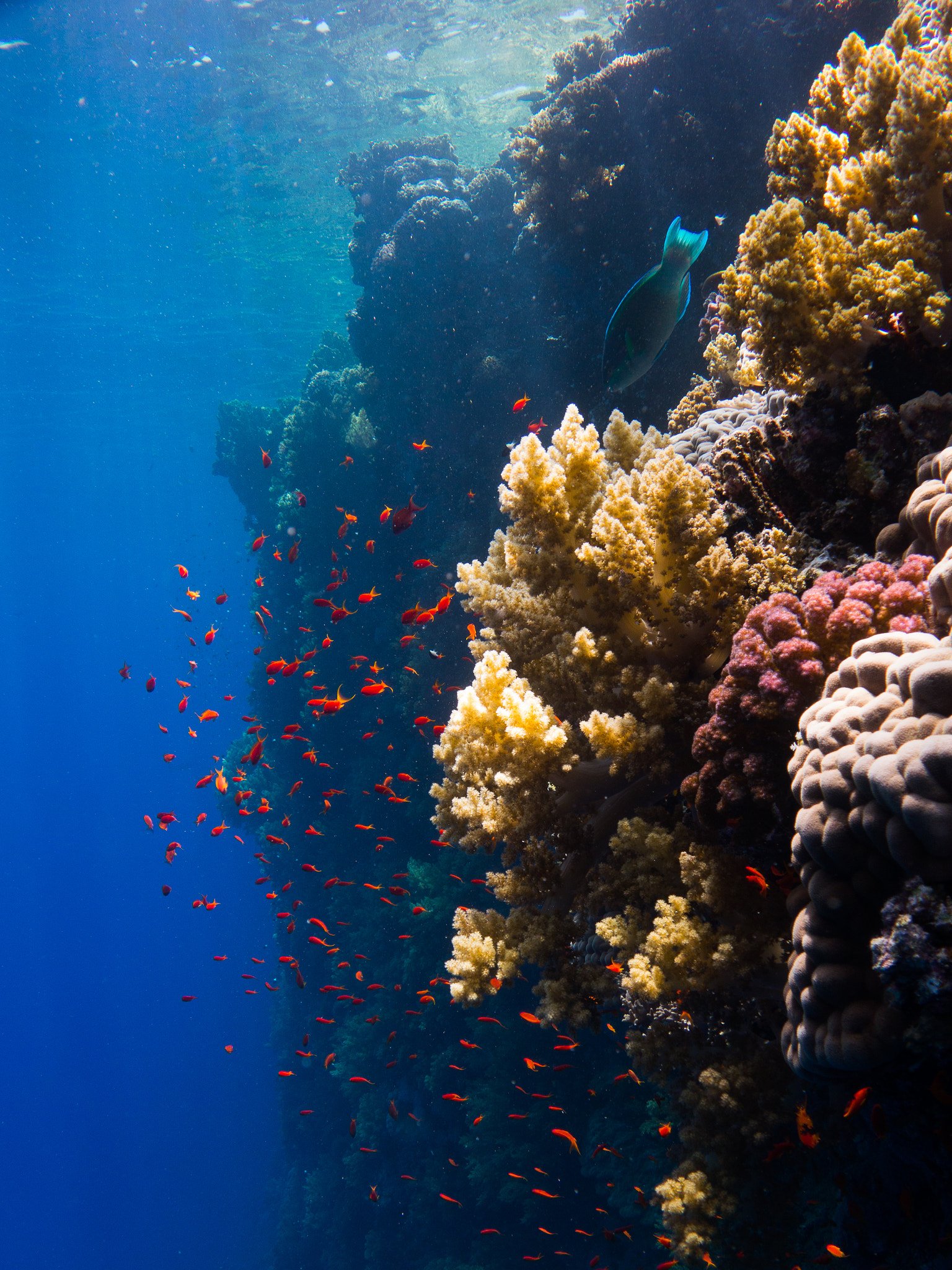
Snorkeling in Hurghada means a boat ride of forty minutes to an hour out to a fringing reef in the Giftun Islands protected area, then two or three stops where you float over coral gardens in water that stays between 70 and 84 degrees Fahrenheit all year, roughly 21 to 29 Celsius. The reef tops sit within arm's reach of the surface, so the fish do not wait for you to dive: orange anthias, parrotfish, butterflyfish, clownfish in their anemones and, at the right spots, green turtles and spinner dolphins. No certification is needed, weak swimmers wear a vest, and kids from about six enjoy it. Half day or full day, we book it with a boat we actually trust.
The reefs you reach by boat, and what each one is good for
Every operator in town runs the same handful of sites, so the difference between a good day and a crowded one is which stops the captain picks and when. These are the ones worth knowing by name, and they are the sea days we build into our Egypt and Red Sea itinerary after the Nile.
Giftun Islands
Two islands, Giftun Kebir and Giftun Soraya, about forty minutes from the marina, inside a protected area where boats tie to fixed moorings. The west side of Giftun Kebir has the famous white sand bay where the crowds go for the beach part of the day. The snorkeling is better on the reef edges around both islands: coral heads rising from a sandy floor at ten to twenty feet, anthias clouds, parrotfish and the odd turtle grazing on seagrass. The default first stop, and it deserves it.
Abu Ramada
A low island just south of Giftun with a steeper drop-off, so you get a wall on one side and shallow coral on the other. The pinnacle known as Abu Ramada Gota is lovely from the surface: soft corals, glassfish, blue-spotted rays on the sand below. There can be current, which is why it is usually the second stop.
Fanadir
A long, narrow reef running north toward El Gouna, with a shallow shelf on top that snorkelers can follow for a good distance and a wall falling away on the outer side. Short ride, protected from most of the swell, and the site the half-day boats use. A strong choice for families.
Sha'ab el Erg, the Dolphin House
A horseshoe reef an hour north with a sheltered lagoon where a resident pod of spinner dolphins rests during the day. The outer reef is excellent on its own, with big table corals and schooling fusiliers; the dolphins are a possibility, not a guarantee. Our Dolphin House guide for Hurghada covers the ethics and timing. The short version: go early, on a small boat, with a crew that cuts the engine and lets the dolphins come to you.
Carless Reef
Offshore pinnacles famous with divers for morays and hammerheads. Deeper and exposed, a diving site first; never book a snorkeling trip on the promise of Carless.
| Reef | Ride from Hurghada | Best for | Conditions |
|---|---|---|---|
| Giftun Islands | 40 min | First-timers, coral gardens, beach stop | Sheltered, moorings, busy by late morning |
| Abu Ramada | 50 min | Wall and pinnacle, rays, soft coral | Some current, better as second stop |
| Fanadir | 25 min | Half-day trips, families, shallow shelf | Protected, calm most mornings |
| Sha'ab el Erg | 60 min | Dolphins plus a big outer reef | Early start, small boats only |
| Carless Reef | 60 to 75 min | Divers, morays, big fish | Exposed, deep, weather dependent |
House reefs you can swim to from the beach
Something the brochures skip: Hurghada town itself is mostly sandy shore with broken reef close in, and it is not the Red Sea you came for.
The real house reefs start once you leave town. South of the city, the bays at Sahl Hasheesh, Makadi Bay and Soma Bay have hotels built on proper fringing reef, with a jetty that walks you over the reef flat to a ladder on the drop-off. Mask on after breakfast, over coral in five minutes, no boat and no schedule. To the north, El Gouna has a couple of similar setups on its outer edge.
If snorkeling is the main reason you are coming, this changes how we book your hotel. A resort with a good house reef gives you a swim every morning, with the boat trips as highlights. Our guides to Sahl Hasheesh and El Gouna explain the resort areas, and if the house reef matters to you, we choose the hotel around it.
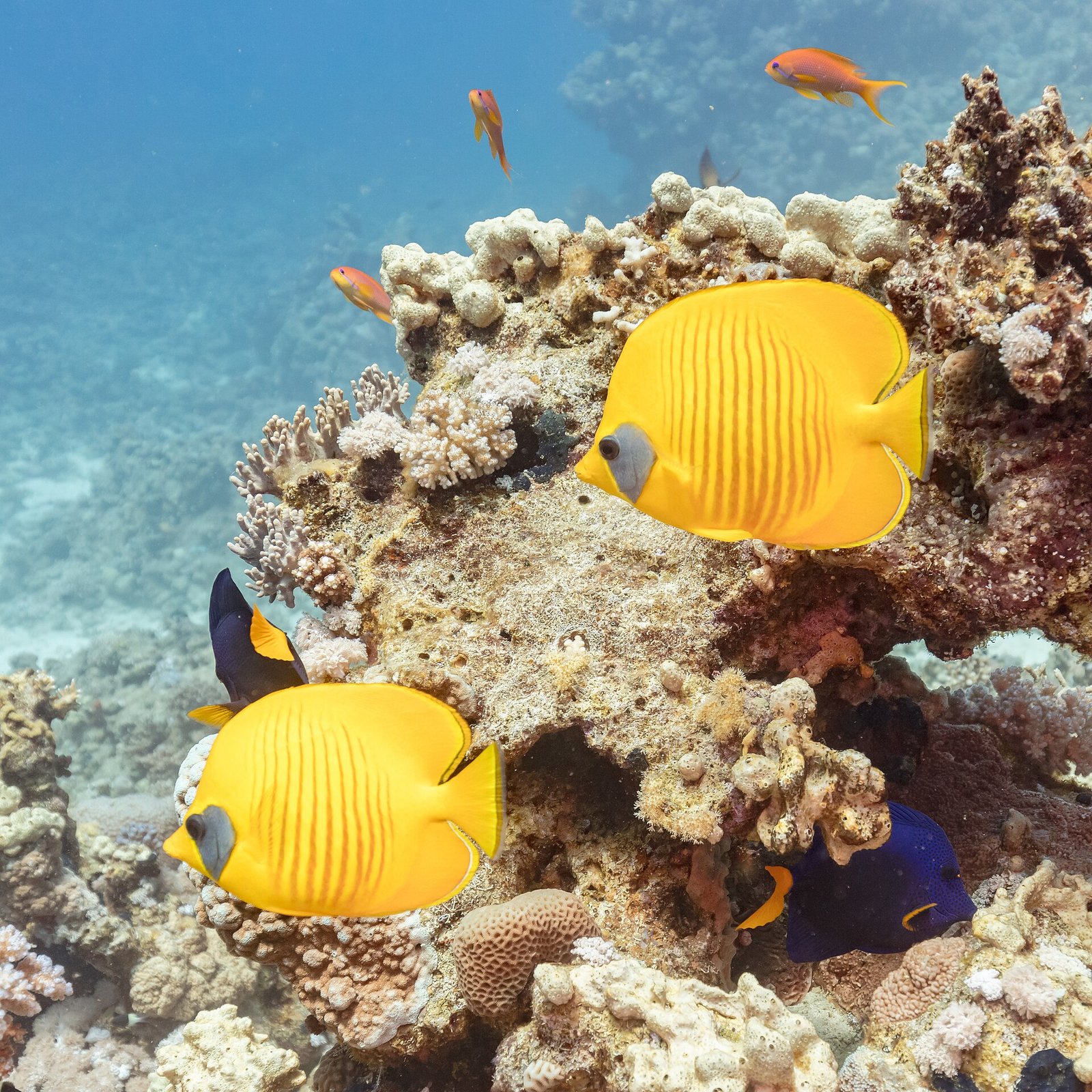
What you actually see in the water
Much of the Red Sea reef community lives in the first fifteen feet, exactly the snorkeling zone. You are not missing the good part by staying on the surface.
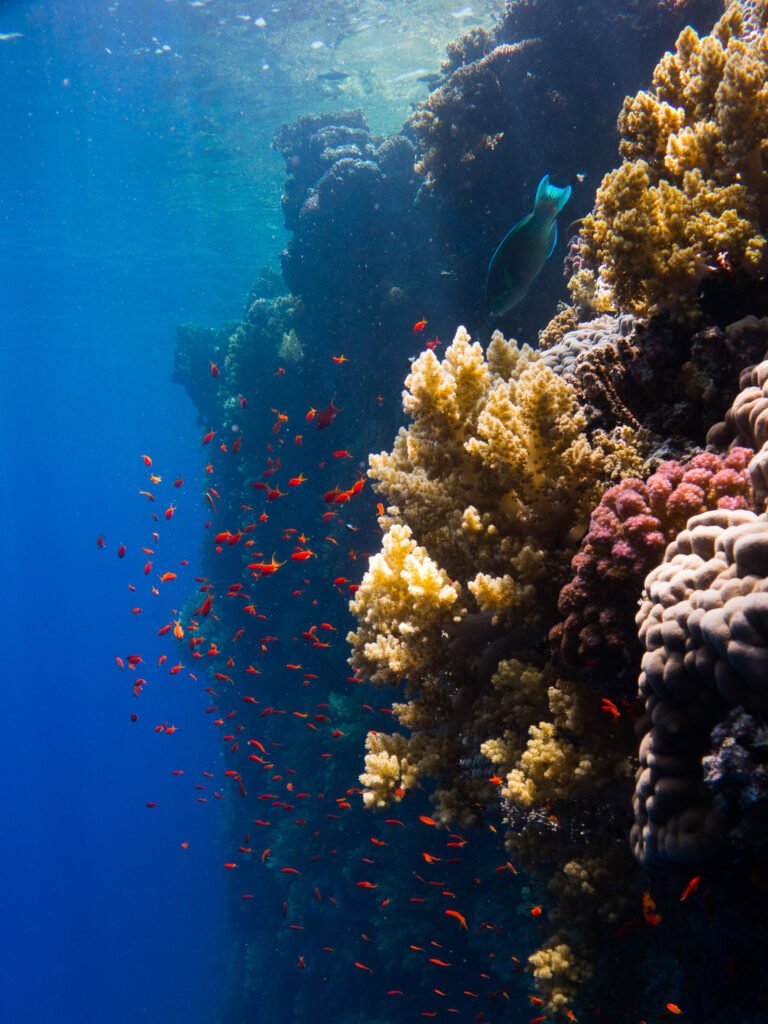
- Anthias. The clouds of small orange fish over every coral head. They make the photos look like an aquarium and vanish into the coral as one when a shadow passes.
- Parrotfish. Big, blue and green, and you hear them before you see them, a clear crunch as they bite the coral. The white sand at Giftun is largely what they leave behind.
- Clownfish. The Red Sea anemonefish never leaves its anemone, so once the guide points one out you can find it again on the next pass.
- Turtles. Green turtles graze the seagrass in the sandy channels around Giftun and Abu Ramada; hawksbills pick at sponges on the reef. They tolerate people well if you stay still and do not chase.
- Dolphins. Spinners at Sha'ab el Erg, occasionally bottlenose passing the boat elsewhere. A possibility on any northern trip, a likelihood on an early one.
Farther south, the seagrass bays around Marsa Alam add dugongs and far more turtles. That is a different trip and a longer drive; if turtles are the point, read our Marsa Alam guide before choosing a base.
The three things you never touch
Fire coral, mustard yellow and smooth, burns for hours after a brush. Stonefish and scorpionfish sit camouflaged on the bottom and the reef flat with venomous spines, the single reason the rule about never standing on the reef exists. Sea urchins wait in shallow rocky areas near shore. None of them attacks; every incident comes from a hand or a foot placed where it should not be.
Reef etiquette that a good boat enforces and a bad one ignores
The Giftun reefs are in good shape because the area has been protected for decades. That only holds if people in the water behave, and the rules are simple.
- No touching. Coral is an animal with a thin living skin. One hand placed on it kills that patch.
- No standing. Not on the reef flat, not on a coral head to fix your mask. Roll onto your back and float, or swim to the sandy patch the guide pointed out.
- No collecting. No shells, coral fragments or starfish. Taking them out of Egypt is illegal, and most of what looks dead is still part of the reef.
- Reef-safe sunscreen. Mineral formulas with zinc oxide or titanium dioxide, without oxybenzone. Better still, a long-sleeved rash guard, which protects the reef and the part of you that burns most: your back, the whole time you float face down.
- Fins up. Fins hit coral without you noticing. Swim with your legs high and slow, and lift them clear over shallow coral.
A good guide briefs all of this before the first stop, then gets in the water and leads the group along the reef edge. That briefing is one of the clearest signs of an operator worth using.
Gear, and whether to bring your own mask
Boats hand out masks, snorkels and fins, and rental gear on a busy day boat is worn. A mask that leaks turns an hour of reef into an hour of clearing water out of your eyes.
So yes, bring your own mask. A decent silicone mask packs flat and is the best investment for anyone planning more than one trip in the water. Test the fit in the store: hold it to your face without the strap, breathe in through your nose, and if it stays put it seals. Pair it with a purge-valve snorkel. Rental fins are usually fine.
What to pack for the day
- Long-sleeved rash guard or swim shirt. Not optional in our view.
- Mineral sunscreen for face, neck and the backs of your legs.
- Hat, towel and a small dry bag; boats supply water and lunch, not towels.
Technique is simple: breathe slowly through your mouth, keep your body flat, kick slowly from the hips with your arms at your sides. Ten minutes in the sandy shallows fixes the beginner's knee-pedaling.
Non-swimmers, nervous swimmers and kids
This is the question we get most from American families, and the answer is encouraging. Snorkeling with a flotation vest does not require you to swim well: the vest holds you up, the mask lets you look down, the fins move you along.
Conditions matter more than ability. Tell us at booking that someone is a weak swimmer, so the boat carries enough vests and the guide picks stops with no current and a sandy patch to start on. Always enter by the ladder, never by jumping, and come back before you feel tired; the current that pushes you away from the boat is easy to miss while you stare at the bottom.
With children
- Adult masks do not seal on a small face. Pack a child-size mask from home; it is the difference between a great day and a miserable one.
- A vest lets them look down without worrying about staying afloat.
- Start in the shallow sandy water at the Giftun beach, feet touching, so they learn to breathe through the tube before the reef.
- Rash guard every time. Children burn on the back in minutes while they float.
- Around six is the realistic starting age for the reef; younger kids enjoy the boat and the beach.
Fanadir and the sheltered side of Giftun are the family reefs; Sha'ab el Erg suits confident kids on a calm day. Our family vacation in Egypt guide shows how the sea days fit around the temples for mixed ages.
Visibility and water temperature by season
The reef barely changes from month to month. What changes is the wind and the water temperature.
| Months | Water temperature | Sea and visibility | Notes |
|---|---|---|---|
| December to February | 70 to 73 F (21 to 23 C) | Northerly wind, choppier afternoons, visibility still 60 to 100 ft | Rent a shorty wetsuit; air is mild, sun still strong |
| March to May | 72 to 77 F (22 to 25 C) | Calming seas, excellent clarity, occasional plankton in late spring | A favorite window, warm days, few crowds |
| June to September | 80 to 84 F (27 to 29 C) | Glassy mornings, best visibility, hot deck | Take the earliest boat; shade and water matter most |
| October to November | 77 to 80 F (25 to 27 C) | Calm and clear, wind returns late November | The other best window, pairs well with a Nile cruise |
Visibility is rarely a problem in any month; you see the bottom at forty feet on an average day. What spoils a trip is wind, a winter and late-autumn thing, and a captain who swaps Sha'ab el Erg for Fanadir on a blowy morning is doing you a favor.
Half day or full day on the boat
| Half-day boat | Full-day boat | |
|---|---|---|
| Hours on the water | Roughly 8 am to 1 pm, or an afternoon slot | Roughly 8 am to 4 pm |
| Reef stops | One or two, usually Fanadir or the near side of Giftun | Two or three, often Giftun plus Abu Ramada, or a northern run to Sha'ab el Erg |
| Lunch | Snacks and drinks | Cooked on board, served at anchor |
| Best for | Small children, seniors, a free morning before the trip home | Everyone else, and anyone who wants turtles, dolphins or more than one reef |
Our default is the full day on a small boat with the earliest departure offered; the reefs are empty at nine and busy at eleven. With three days, do a full day first, a house-reef day second, and a half day or a lazy beach on the third.
Private boats suit a family or two couples: you choose the stops and the crew is yours. We arrange both, alongside the desert and Luxor day trips in our excursions from Hurghada.
How to spot a good operator, and how Explora Egipto books it
The marina is full of day boats selling the same trip at the hotel desk, and quality varies enormously. These questions separate them.
- How many people on the boat? Fifteen guests and two stops give you more water time than fifty guests and three. Ask for the number, not "small group".
- Does a guide get in the water? A guide who swims with the group and keeps people off the coral is the whole difference. A crew that stays on deck is a ferry.
- Which reefs today? A real answer names the sites. A vague "the best islands" means the same crowded mooring as everyone else.
What we do is simpler. We work with a short list of Hurghada boats whose crews we have been out with, we tell you which one fits your group, and we put the sea day into the rest of the plan: the transfer from Luxor, the hotel with or without a house reef, and a pickup time that matches the boat. If you want the pharaohs as well, the sea days slot in after the cruise, as in our Nile cruise from Hurghada combination. Tell us who is traveling and how many days you have, and we send you the quote.
Frequently asked questions
Is Hurghada or Sharm el Sheikh better for snorkeling?
Both are excellent. Sharm has world-class reef right off the shore at Ras Mohammed, so more of the snorkeling is from the beach. Hurghada's best reef is on offshore islands, so the day is built around a boat, with the Giftun beach and the dolphin lagoon as bonuses. Hurghada is far easier to combine with Luxor and a Nile cruise, which is why most of our itineraries use it.
Do I need to know how to swim to snorkel in Hurghada?
No. With a flotation vest, which every decent boat carries, you float at the surface and look down without treading water. You do need to be comfortable with your face in the water and breathing through a tube, which most people learn in ten minutes in the shallows at Giftun. Tell us at booking so the guide picks stops with no current and stays close to you.
Can you snorkel in Hurghada in winter?
Yes. The water drops to around 70 to 73 degrees Fahrenheit, about 21 to 23 Celsius, from December to February, fine for thirty minutes in a rash guard and much nicer in a rental shorty wetsuit. The real winter variable is wind: a good captain chooses the sheltered side of Giftun or Fanadir on a blowy day and saves the northern reefs for a calm one.
Will I see dolphins or turtles while snorkeling?
Turtles are a strong likelihood on a full day around Giftun and Abu Ramada, where green turtles graze the seagrass patches. Dolphins are a possibility, best at Sha'ab el Erg early in the morning on a small boat that cuts its engine and waits. Nobody honest guarantees either, so treat a dolphin sighting as the bonus of the day.
Is snorkeling in Hurghada safe for children?
Yes, with three things in place: a child-size mask that seals, a vest, and a start in shallow sandy water before the reef. Reef trips work from around six years old; younger children enjoy the boat and the beach. Choose Fanadir or the sheltered side of Giftun, put a rash guard on them every time, and stay within arm's reach. The animals are not the risk; the sun and a leaky mask are.
How does a snorkeling day fit into an Egypt tour?
Usually at the end. A typical shape is Cairo, then the Nile cruise between Luxor and Aswan, then a drive from Luxor to Hurghada for two or three sea days. The snorkeling boat goes on the first full day, a house reef or a second boat on the next, and the last day stays free. We build that sequence and send you the quote with boat, hotel and transfers included.
See the Red Sea reef without a dive certificate
Tell us your dates, who is traveling and whether you want the reef every morning from a hotel jetty or a couple of big boat days at Giftun and the Dolphin House. We come back with the boat, the hotel and the transfers that fit. No prices on this page, just a quote in your inbox.